
Last updated November 16, 2026
 Wrought iron
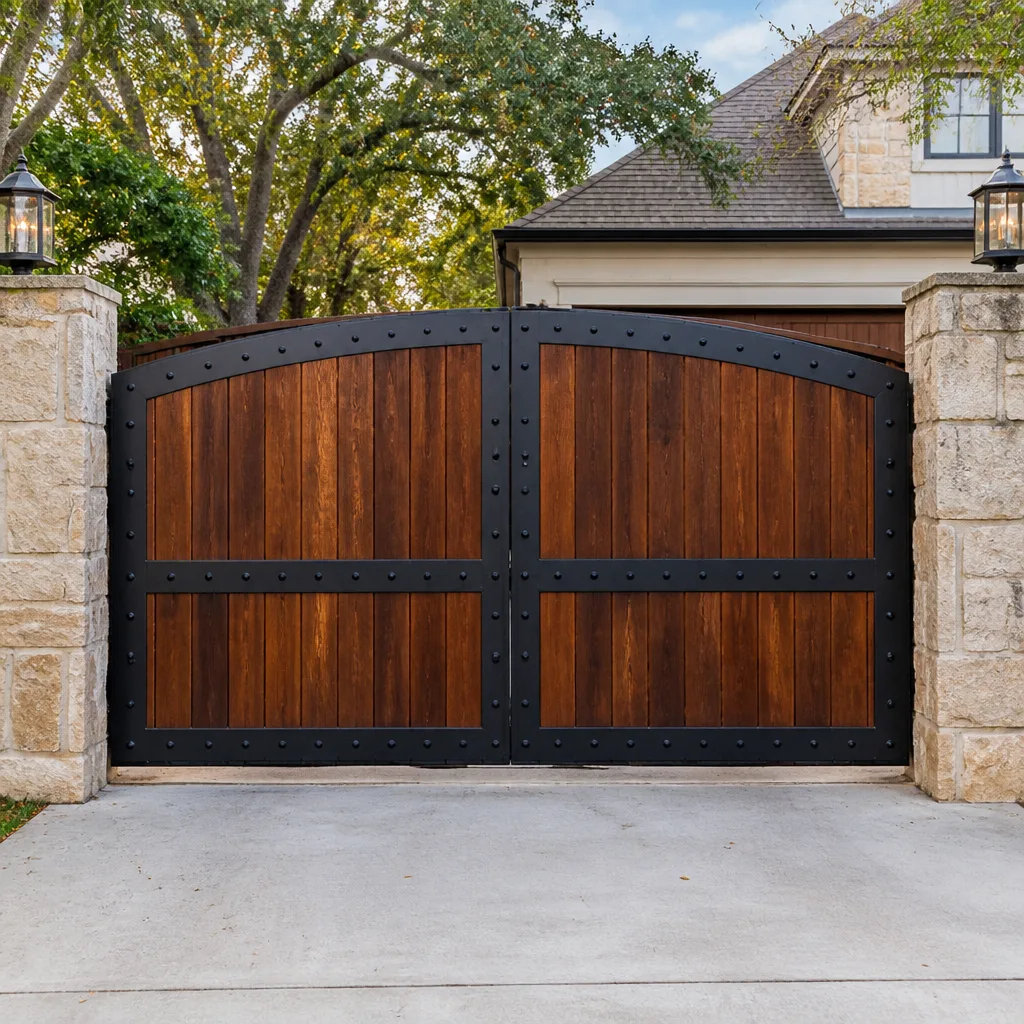 Wood & steel frame
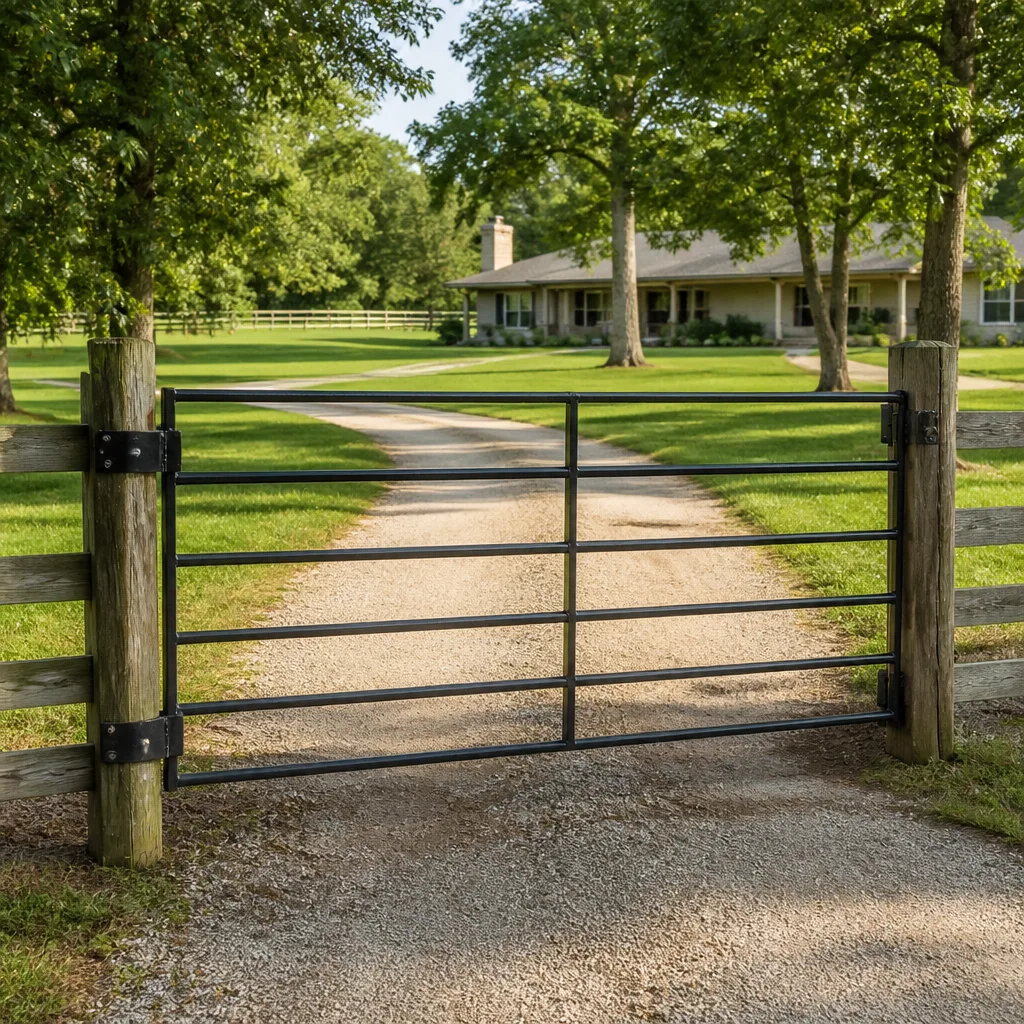 Farm & ranch
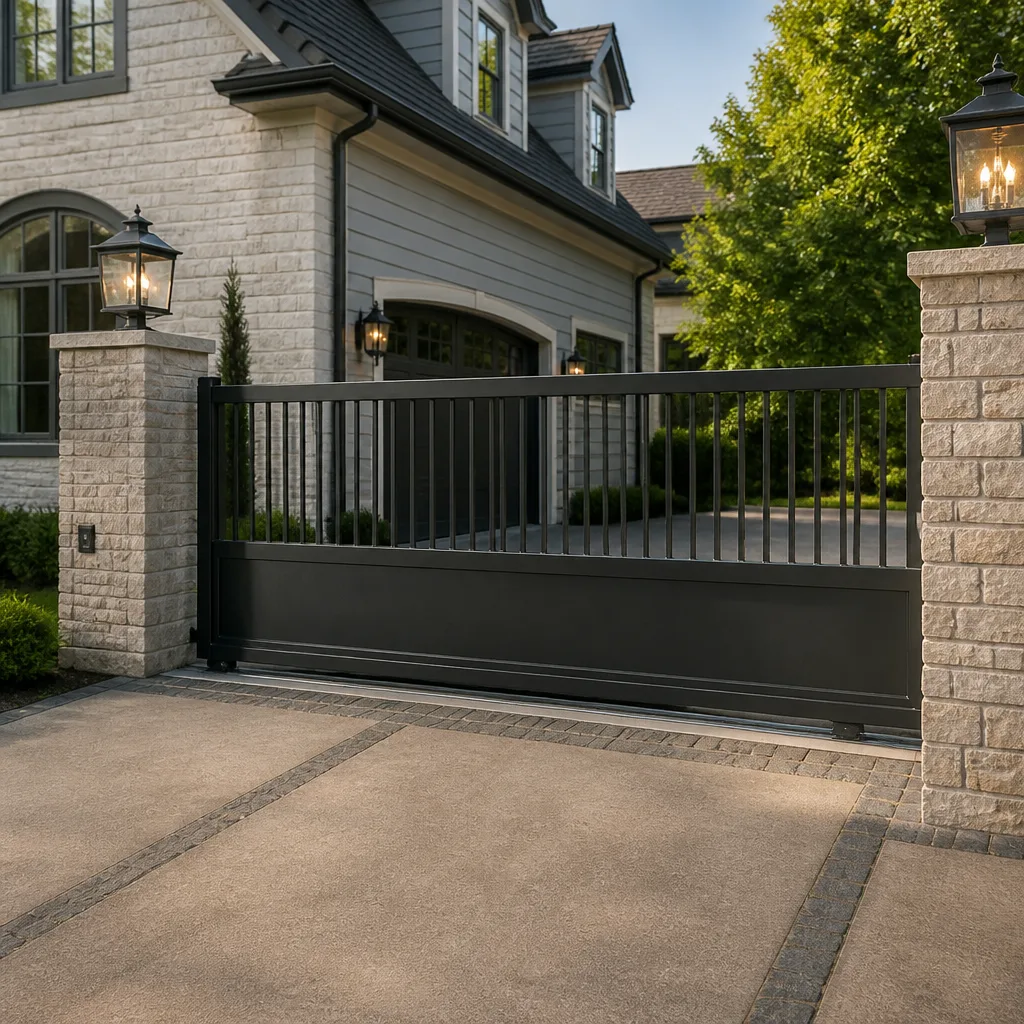 Sliding driveway gates
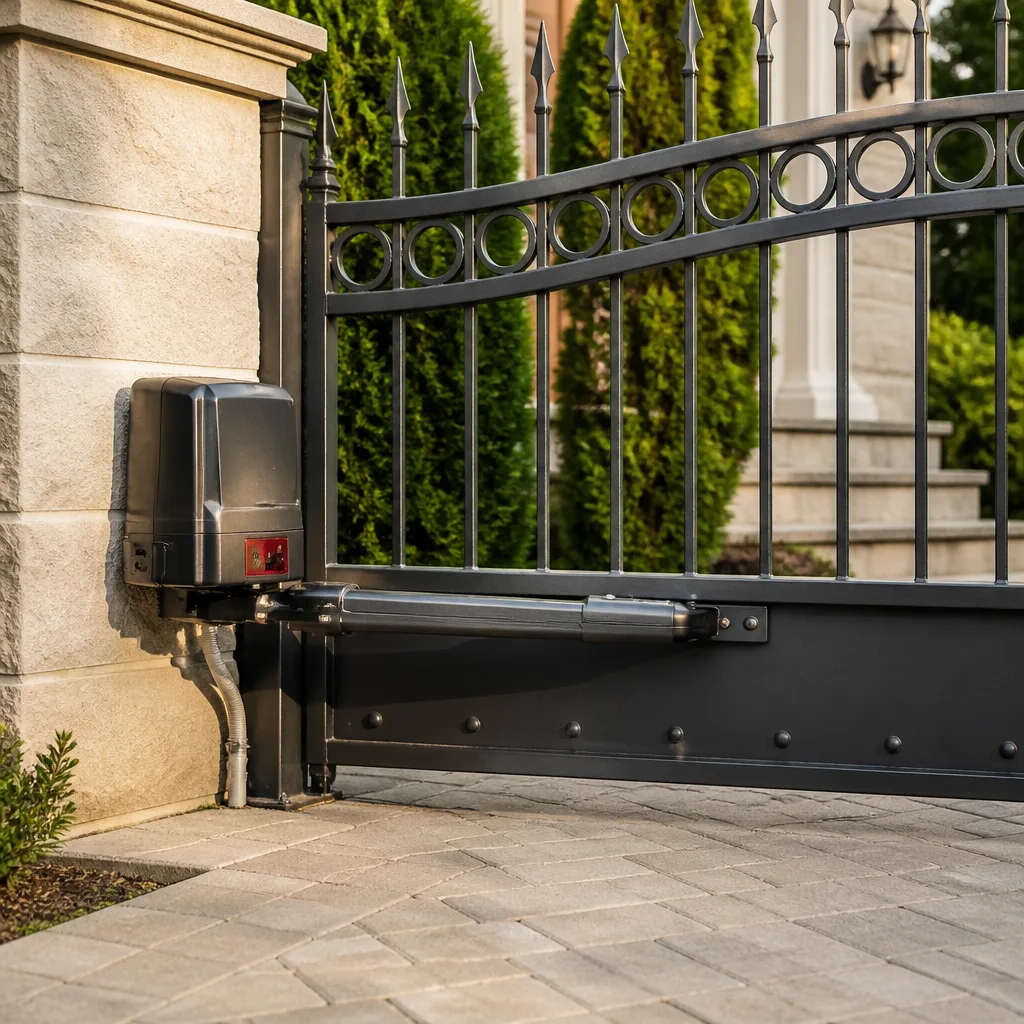 LiftMaster operators
Free on-site gate assessment - hinges, posts, and your LiftMaster or Nice gate operator checked before anything is quoted
The assessment is free and the quote is the invoice.
Get your free estimateGate Repair Warning Signs: An Everett Homeowner’s Reference Guide
Most gate failures aren’t sudden. They announce themselves first, usually weeks ahead, through a sound that changes pitch, a leaf that reverses for no reason, or a keypad that takes two tries instead of one. The trouble is that the same symptom points to completely different parts depending on the operator behind it. A buzzing noise on one brand means a stuck limit switch; on another it means a control board on its way out. This guide decodes those signals by what you actually observe at your driveway in Everett, so you can tell a ten-minute adjustment from a job that needs a scheduled service visit.
Quick Answer
Common gate repair warning signs include grinding or clicking sounds, a gate that reverses mid-cycle, partial travel that stops short, delayed response to the remote, warning lights or error codes on the operator, and physical symptoms like rust bleed at hinges or a swollen frame that drags. Each symptom maps to a specific component – motor, gearbox, chain, limit switch, photo eye, loop detector, or control board – and the fix depends on which one it is. Anything involving a reversed gate, a gate that won’t stop, or visible electrical damage should be checked by a technician before the gate is used again.
Styles & brands we work with
- Wrought iron
- Wood & steel frame
- Farm & ranch
- Sliding driveway gates
- LiftMaster operators
Table of Contents
- What the Sounds Tell You: Grinding, Clicking, Humming, and Silence
- Behavioral Warning Signs: Intermittent Operation, Partial Travel, and Reversing
- Electrical Indicators: Lights, Error Codes, and Operator Displays
- The Urgency Matrix: What Needs Attention Now vs. What Can Wait
- Warning Signs Specific to Everett Conditions
- Swing Gates vs. Slide Gates: Different Systems, Different Signals
- Operators, Power, and Safety Edges: The Dangerous Parts
- Repair or Replace: How to Tell Which Makes Sense
What the Sounds Tell You: Grinding, Clicking, Humming, and Silence
Sound is the first diagnostic tool a technician uses, and it’s one you can use too. Before you ever open a panel, listen to the gate through a full cycle with the motor running and note what you hear. Here’s how we read the four most common sounds.
- Grinding: Almost always mechanical. Metal-on-metal grinding points to a worn gearbox, a dry or misaligned chain, or a track that’s collected grit. This is the signal that gets worse fastest if ignored, because a grinding gearbox will eventually strip and take the motor with it.
- Clicking: Often electrical. A rhythmic click from the operator housing can be a relay engaging and disengaging, a control board struggling to hold a command, or a limit switch that isn’t registering. Clicking without movement is the classic sign a control component is failing.
- Humming with no movement: The motor is receiving power but the gate isn’t traveling. On a swing operator this often means a binding hinge or a failing capacitor; on a slide gate it can mean the chain is jammed or a wheel has dropped off its track. Stop running it and get it looked at – a motor that hums against a jam can overheat.
- Silence: Nothing at all when you press the remote usually means power, not mechanics. Check the breaker first, then the operator’s own fuse or battery backup. If power is fine and the gate is still silent, the control board or receiver is the likely culprit.
One important caveat: the same sound can mean different things by brand. A faint buzz that indicates a stuck limit on a LiftMaster swing operator can indicate a board fault on a FAAC or BFT unit. That brand-level familiarity is why we keep repair notes across the operators we work on, so a technician arrives already knowing the likely pattern for your model.
Behavioral Warning Signs: Intermittent Operation, Partial Travel, and Reversing
How a gate behaves through its cycle says as much as how it sounds. Watch a full open-and-close and note whether the motion is smooth, whether it stops where it should, and whether it responds the first time you press the button.
Intermittent operation – the gate works one day and ignores you the next – usually points to a loose connection, a failing receiver, or an obstruction in the path of a safety sensor. It’s the most frustrating symptom because it never misbehaves when the technician is standing there. Note the conditions when it happens: cold mornings, after rain, or after a power flicker all narrow the field.
Partial travel is a gate that opens halfway and stops, or closes but leaves a gap. On most operators this is a limit switch that has drifted out of adjustment, or a travel timer that needs resetting. On a slide gate, a wheel that’s dropped or a track that’s settled can cause the same partial motion because the operator is fighting resistance.
Reversing mid-cycle is the symptom that sends the most homeowners to the phone. A gate that reverses for no visible reason is responding to a signal – usually a photo eye that thinks something is in the path, a loop detector that’s picking up a false reading, or a safety edge that’s shorted. It’s rarely random, and it’s rarely a full motor failure.
Delayed response – press the remote and wait two seconds before anything happens – often comes down to a weak battery in the remote or a receiver antenna that’s picked up interference. Sometimes it’s an aging control board. If the delay grows over weeks, get it checked before it stops responding entirely.
Electrical Indicators: Lights, Error Codes, and Operator Displays
Modern operators are built to tell you what’s wrong – if you know where to look. Most units have at least one indicator light on the control board, and many have a small display or a flash-code system. Learning to read yours is the single fastest way to describe the problem when you call.
- Check the power indicator first. On most operators this is a steady LED on the board. If it’s dark, the problem is upstream: breaker, fuse, or the low-voltage transformer that feeds the board.
- Count the flashes. Many brands use a flash sequence to report a fault – a set number of blinks, a pause, then another set. The pattern repeats. Write down the sequence; it’s a diagnostic shortcut a technician can decode by model.
- Read the display code if you have one. Operators with a small screen often show a two-digit code. On a LiftMaster or Linear unit, those codes point to specific faults like an obstruction, a limit error, or a board issue. FAAC and BFT commercial operators sometimes use a different code scheme, which is why brand-specific knowledge matters here.
- Listen for the click that shouldn’t be there. A board that’s failing often clicks audibly when it receives a command but can’t complete the circuit. That click combined with a lit power LED and no movement is a strong signal of a board-level repair.
One caution before you go poking around: gate operators run on line voltage, and the control board holds a charge even after you cut power at the breaker. Do not open the operator housing to inspect the board yourself. Read what’s visible from outside, note the codes, and leave the inside to a technician. This is exactly the kind of diagnostic call that electric gate repair covers, and it’s one of the most common reasons homeowners in Everett reach out to us.
The Urgency Matrix: What Needs Attention Now vs. What Can Wait
Not every warning sign is an emergency. Some mean “stop using the gate and call today”; others mean “book a service visit this week or next.” Here’s the split we use.
- Stop using the gate and call today: a gate that reverses and won’t complete a close; a gate that won’t stop moving when commanded; visible sparking, burning smell, or scorched wiring at the operator; a gate that has come off its track or is leaning on its hinges; a safety edge or photo eye that’s damaged and no longer detecting.
- Book a service visit soon (within a week or two): grinding or clicking that’s just started; partial travel that leaves the gate short of fully open or closed; error codes that clear on their own; a keypad or remote that works only intermittently; a gate that’s noticeably slower than it used to be.
- Schedule at your convenience: a squeak or creak in the hinges; cosmetic rust bleed at fasteners; a remote that needs a fresh battery; a gate that’s due for a one-time lubrication and inspection visit.
The line between the first two categories isn’t always obvious, and it’s better to err on the side of a call. A gate that reverses when it shouldn’t is a safety issue, not just an inconvenience – if a vehicle or a person is in the path when it closes, the safety system is the only thing between them and the gate panel. When in doubt, stop using the gate and call (844) 834-1197. We answer 24/7, and fast dispatch runs from 7am to 7pm, Sunday through Friday.
Warning Signs Specific to Everett Conditions
Gates around Everett live in a particular climate, and the wear patterns here reflect it. The wet season, the freeze-thaw swings in the foothills, and the sheer amount of rain that falls between fall and spring all leave their marks on a gate system. These are the signs we see most often in this area.
Rust bleed on hinges and fasteners. When you see orange-brown streaks running down a hinge or a post bracket, water has been sitting in a joint long enough to start the steel oxidizing. Left alone, a hinge seizes, and a seized hinge forces the operator to work harder – which is often the real cause behind a swing gate that starts grinding or humming. A lubricated, dry hinge is a healthy hinge; a rusty, wet one is on its way to a repair.
Swollen wooden gate frames. Wood absorbs moisture and expands. In a wet Everett winter, a timber gate frame can swell just enough to drag on the ground or bind against its posts. That binding shows up as partial travel, a motor that strains, or a gate that stops halfway. If your gate is wood and it moves fine in summer but drags in winter, moisture is the likely cause.
Post heave from waterlogged ground. A gate post set in soil that soaks and freezes can lift, tilt, or settle over time. A slightly out-of-plumb post throws off the whole gate’s alignment, which shows up as a gate that rubs on one side or a slide gate whose track no longer sits true. If you notice the gate catching at the same point every cycle, check whether the post has moved.
Standing water at the operator base. If the ground around your operator doesn’t drain, water can pool at the base of the housing and work its way into the wiring. That’s a setup for control board failure. Look for silt or debris build-up after a heavy rain, and clear it.
These Everett-specific signs are the ones we walk through first on a diagnostic visit. If you’re seeing any of them on a gate that’s also showing a behavioral or sound warning, it’s worth getting the whole system looked at together. You can learn more about how we handle gate repair locally, or check out what we cover across Everett.
Swing Gates vs. Slide Gates: Different Systems, Different Signals
The warning signs split along system type, and reading them correctly saves a service call that goes down the wrong path.
Swing gates (single or double leaf, driven by an arm or an underground operator) tend to show their wear at the hinges, the arm, and the limit switches. A swing gate that starts slow usually has a hinge problem or an arm adjustment issue. A swing gate that reverses mid-cycle is often detecting something the photo eye perceives, or its safety edge has been triggered. On double-leaf swing gates, one side lagging behind the other is a classic sign of a control board sequencing fault or one operator’s limit drifting.
Slide gates (rolling on wheels along a track, or cantilevered) show their wear at the track, the wheels, and the chain or rack. A slide gate that grinds is usually a track issue or a wheel that’s seized. A slide gate that stops partway is often a limit switch or a chain tension problem. A slide gate that reverses has likely tripped its safety edge or its loop detector, or it’s encountering resistance that the operator interprets as an obstruction.
Barrier arm gates – common at parking entrances – have their own signals: an arm that hesitates before rising, an arm that doesn’t fully raise, or a loop detector that won’t clear. These are usually control or loop issues rather than motor problems.
We work on all three configurations, residential and light commercial, so we can tell you which category your symptom falls into before the technician arrives. That means a faster diagnosis and a shorter repair. When the operator is what’s failing – not the gate structure – the work falls under electric gate repair, and we handle brand-level diagnostics for LiftMaster, FAAC, BFT, Linear, and the other operators most Everett homeowners and property managers own.
Operators, Power, and Safety Edges: The Dangerous Parts
Of everything on a gate system, three components carry real physical danger: the operator’s power supply, the moving gate panel itself, and the safety devices that are meant to stop it. A gate operator runs on line voltage, and the wiring inside the housing stays energized even when the operator is switched off at the remote. Do not open the housing, do not touch the wiring, and do not attempt to jump a safety edge or bypass a photo eye to get the gate moving again. That bypass is one of the most dangerous shortcuts a homeowner can take, because it disables the only thing standing between a closing gate and a person in its path.
Our guidance on the dangerous parts is simple:
- Power and wiring: leave it to a technician. Line voltage inside an operator is not a DIY repair area, and the risk isn’t worth it.
- Heavy panels: a steel or timber gate leaf can weigh well over a hundred pounds. Never stand in the path of a gate that’s moving unpredictably, and never try to hold a closing gate open with your body.
- Slide gates that come off track: a slide gate that has jumped its track or lost a wheel can tip or fall. Stop using it, block access if you can do so safely, and call for service.
- Safety edges and photo eyes: if either is damaged or responds slowly, get it repaired before the gate is used again. These aren’t optional accessories; they’re the primary safety layer.
We treat the safety parts of a gate system as a priority because they’re the reason the gate can be trusted to run automatically at all. If you suspect a safety component is failing, call (844) 834-1197. We answer 24/7. Fast dispatch from 7am to 7pm, Sunday through Friday.
Repair or Replace: How to Tell Which Makes Sense
The question every homeowner eventually asks: is this a repair, or is it time for a new gate or operator? The honest answer depends on four factors, and we walk through them in order before recommending anything.
- Age and parts availability. If the operator is old enough that parts are no longer made, a repair may be a temporary patch rather than a lasting fix. If the operator is a current model – most LiftMaster, Linear, and Mighty Mule units still in production, for example – a repair is almost always the better path.
- What actually failed. A board, a motor, a photo eye, or a limit switch is a component-level repair. A gearbox that’s failed and stripped the motor’s drive shaft is a bigger job. Structural rust or post damage that’s compromised the gate’s alignment may point to replacement of the gate rather than the operator.
- How the gate is used. A residential swing gate that cycles a few times a day has different wear than a light-commercial slide gate that cycles constantly. The duty cycle matters to how long a repair will hold.
- Your budget and timeline. We’ll give you both numbers – repair estimate and replacement estimate – so you can make the call. A written estimate sets the price, and that price is agreed before any work starts.
Our position is straightforward: repair or replace, we’ll tell you which one actually makes sense. We don’t recommend a full replacement when a board or a limit switch will get you back to secure. That said, when the gate itself is structurally compromised – a post that’s heaved, a frame that’s rotted through, a gate that no longer hangs true – a repair on the operator won’t fix the underlying problem, and we’ll say so. If you’re starting fresh or your system has reached the end of its life, our Gate Repair Everett team also handles complete gate installation, so you don’t need a different company when your needs change.
Common Mistakes to Avoid
- Ignoring a grinding or clicking sound because the gate still works. A gate that runs but grinds is a component on its way to failure. The repair is usually smaller and cheaper now than it will be after the gearbox strips or the board burns out.
- Bypassing a photo eye or safety edge to “fix” a reversing gate. This is the most dangerous mistake on this list. A reverser that’s been bypassed has no safety layer, and a gate that closes on a person or a vehicle is a real injury risk, not a hypothetical one.
- Opening the operator housing to inspect the wiring. Line voltage lives inside that housing. Call a technician instead of poking around; the diagnostic is not worth the risk.
- Assuming the motor is dead when the gate is silent. A silent gate is often a tripped breaker, a blown fuse, or a dead remote battery. Check power before you assume the worst.
- Waiting for a swollen wooden gate to “dry out.” In an Everett wet season, the swelling often lasts for weeks, and the binding keeps straining the operator. A scheduled adjustment prevents the premature motor wear.
- Letting rust bleed at a hinge go unaddressed. A seized hinge forces the operator to work harder every cycle. Lubrication and a hinge check early on prevents the grinding and humming that follow.
- Calling a general handyman for a gate repair. Gate systems have their own language – operators, limit switches, loop detectors, control boards. A focused gate specialist diagnoses the component, not just the symptom, which saves return visits and guesswork.
See the difference
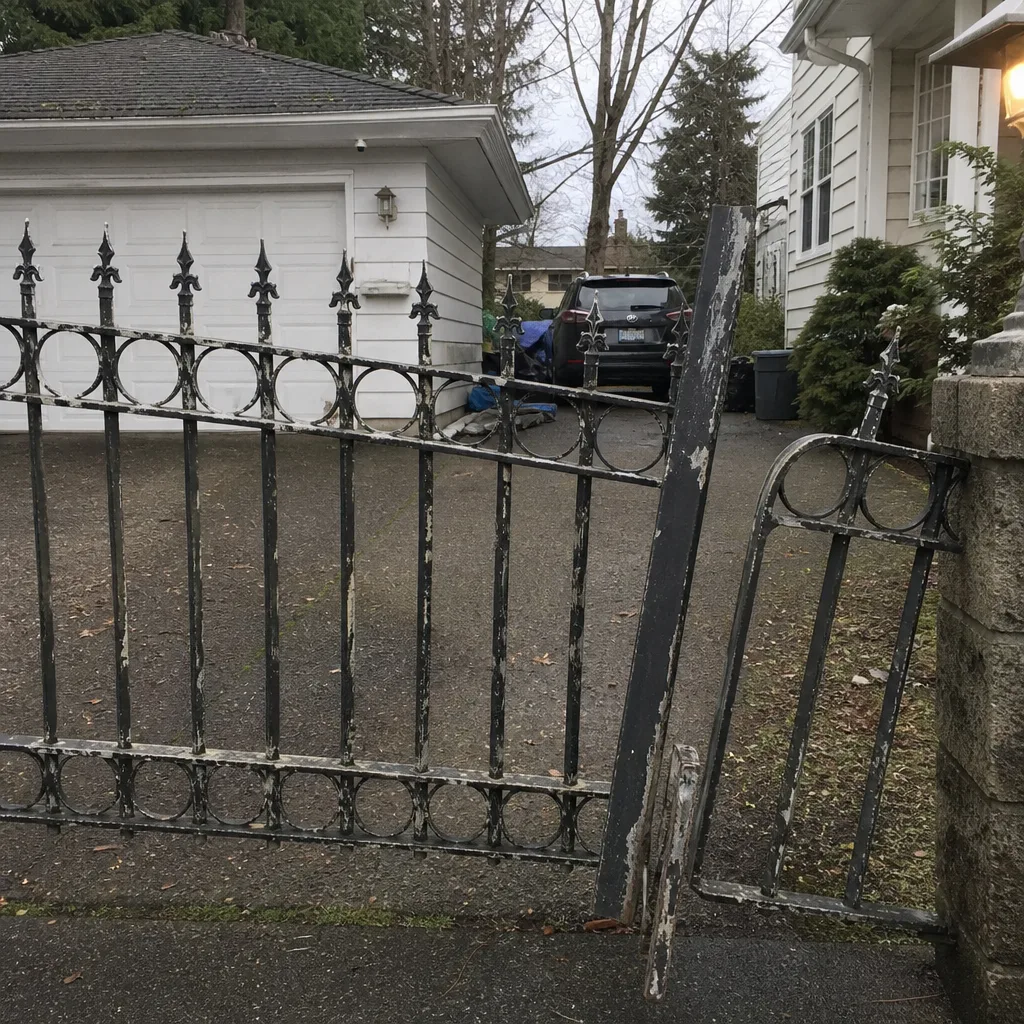 Before
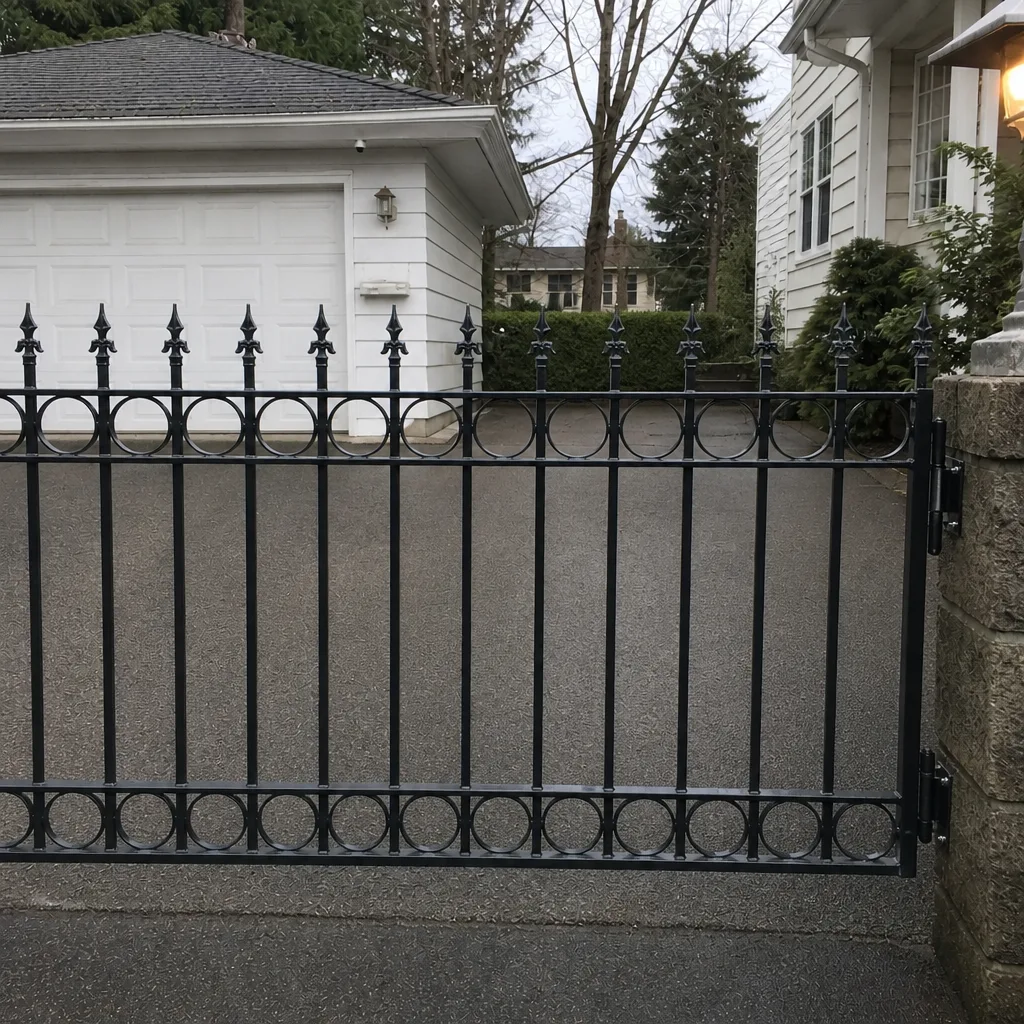 After
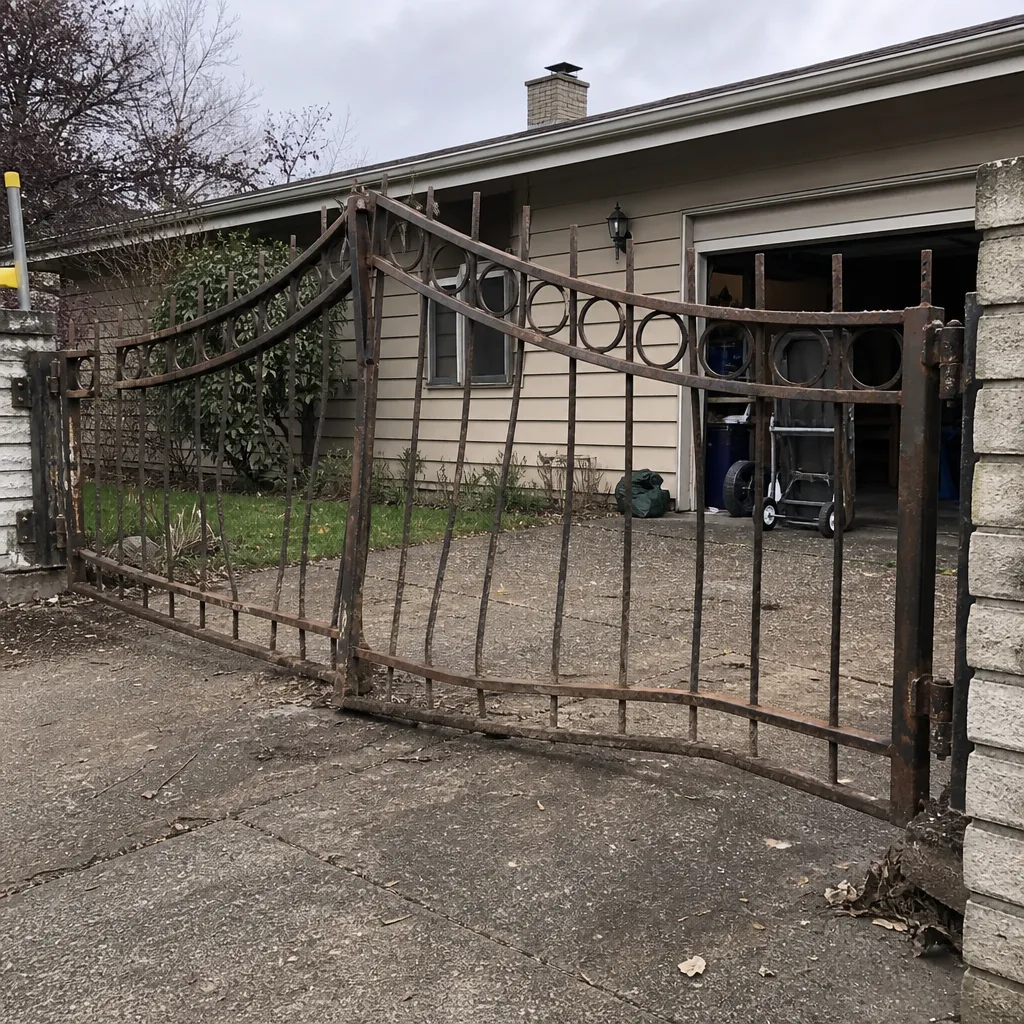 Before
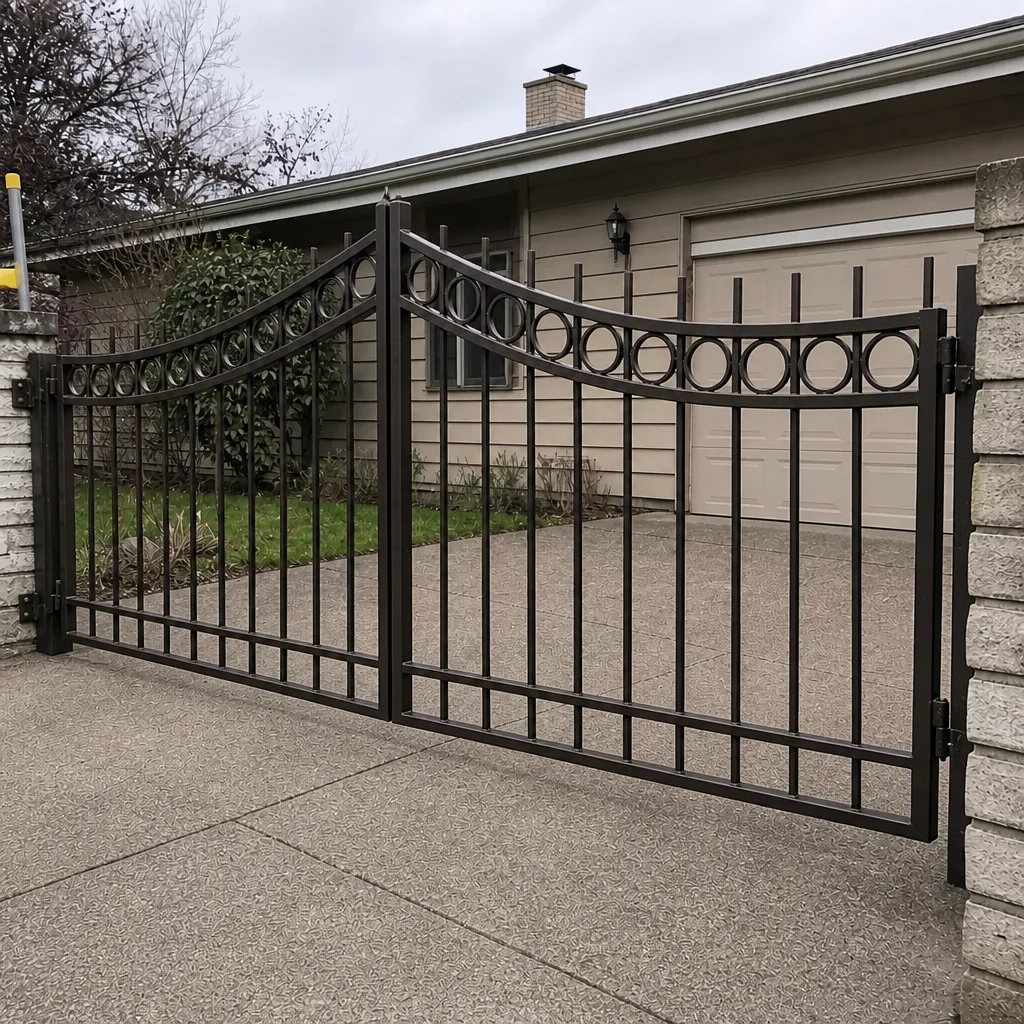 After
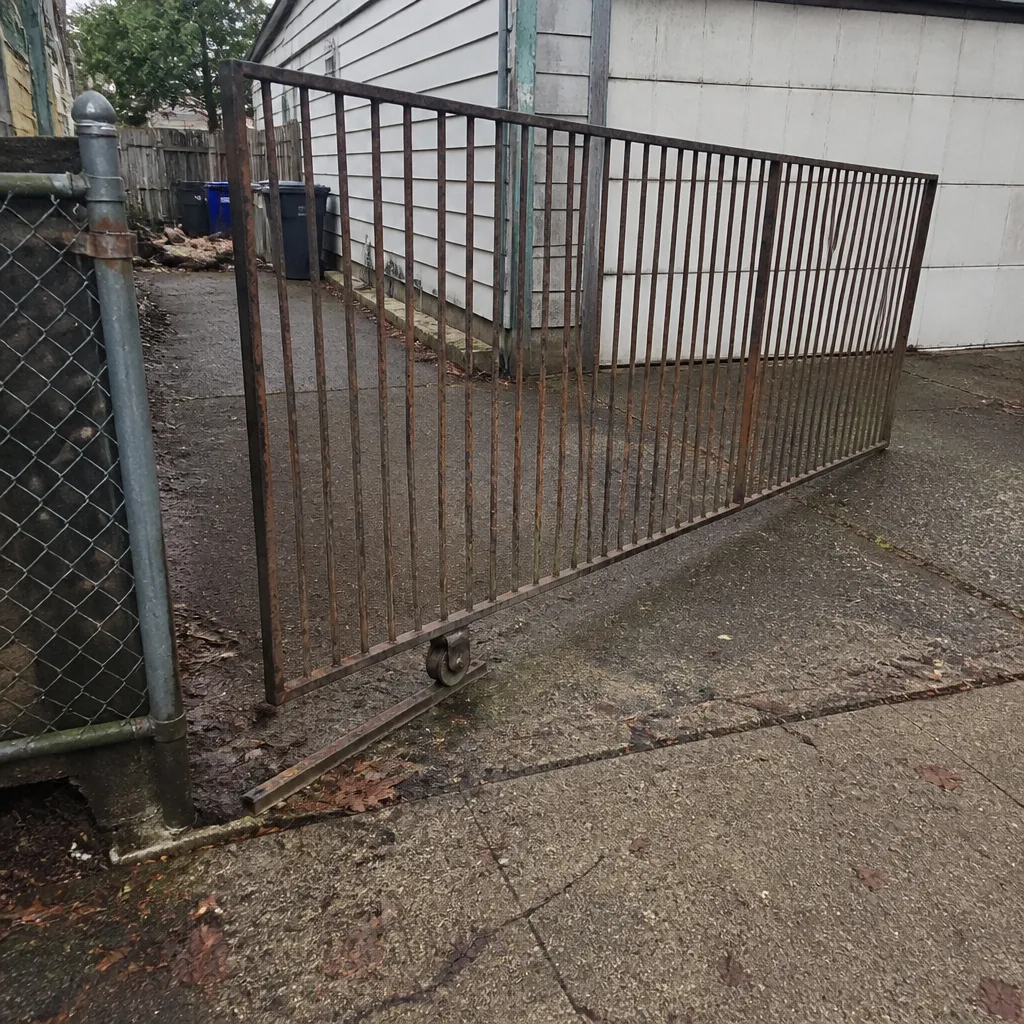 Before
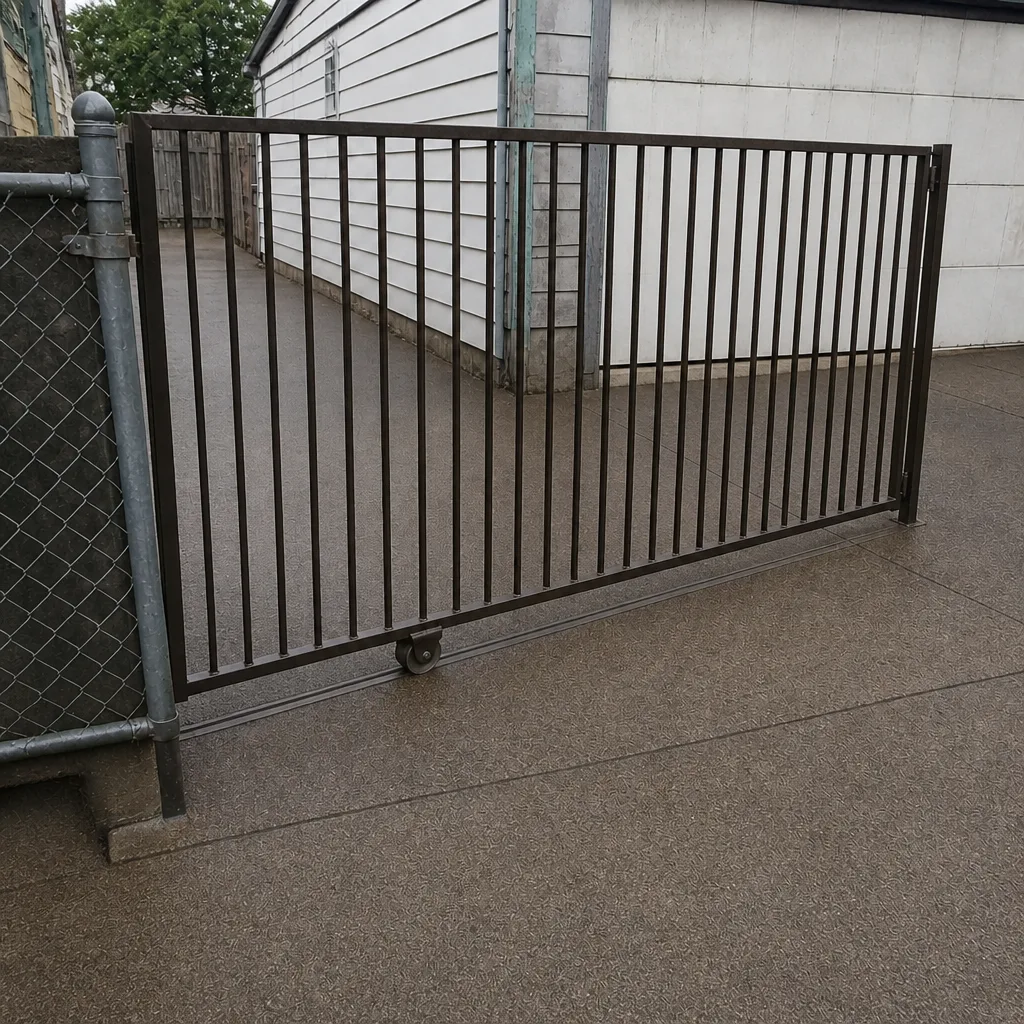 After
When to Call a Professional
Call us when a symptom falls into the “stop using the gate” column: a reversing gate that won’t complete its close, a gate that won’t respond to the stop command, visible burning or sparking at the operator, a gate off its track, or a damaged safety edge. Call when a sound or behavior has recently appeared and you’d rather catch it early. And call when you’re not sure whether you’re looking at a repair or a replacement – we’ll walk through both options with a written estimate, and the price is set before any work begins. Gate Repair Everett offers free estimates in Everett – call (844) 834-1197. We answer 24/7. Fast dispatch from 7am to 7pm, Sunday through Friday.
Frequently Asked Questions
The most common warning signs are grinding or clicking sounds, a gate that reverses mid-cycle, partial travel that leaves the gate short of fully open or closed, delayed response to a remote, and warning lights or error codes on the operator. Physical signs like rust bleed at hinges, swollen wooden frames, and post heave also count. Any of these that affect how the gate stops or closes is a safety issue, so treat it as a call. Call (844) 834-1197 for an exact quote – estimates are free.
A reversing gate is almost always responding to a signal from a safety component, not failing randomly. The usual culprits are a dirty or misaligned photo eye, a loop detector false-triggering, or a shorted safety edge. On some brands, a control board fault can also cause reverse behavior. Stop using the gate until a technician checks it, because a reverser that’s not working correctly has no reliable safety layer. Call (844) 834-1197 – we answer 24/7, and fast dispatch runs from 7am to 7pm, Sunday through Friday.
Most operators have at least a power LED and many use a flash-code sequence – a set number of blinks, a pause, then a repeat. Write down the sequence and note the brand and model. LiftMaster and Linear units often use a two-digit code on a display; FAAC and BFT commercial operators may use a different code scheme. Don’t open the housing to look at the board yourself – line voltage is present. Read what’s visible, note the codes, and call us at (844) 834-1197 for a free estimate on the diagnostic.
Yes, they split by system type. Swing gates show wear at hinges, the arm, and limit switches, and a slow swing gate usually has a hinge or arm issue. Slide gates show wear at the track, the wheels, and the chain or rack, and a grinding slide gate is usually a track or wheel problem. A slide gate that reverses has likely tripped its safety edge or loop detector. Both configurations are covered by our electric gate repair service. Call (844) 834-1197 for a free estimate.
Moisture causes three specific problems in Everett: wooden gate frames swell and drag, hinges and fasteners rust and seize, and gate posts set in waterlogged ground can heave or settle and throw the gate out of alignment. Any of these can make a gate strain, grind, or stop partway through its cycle. If your gate binds more in the wet months, moisture is the likely cause. Call (844) 834-1197 for a free estimate on an alignment and hinge check.
You can safely check the breaker, replace a remote battery, and clear debris from a photo eye lens. You should not open the operator housing, touch the line-voltage wiring, or bypass a safety edge or photo eye – those are genuinely dangerous, and a bypassed safety device puts anyone in the gate’s path at risk. If a repair requires opening the operator or working on the safety system, call a technician. Call (844) 834-1197 – estimates are free, and the price is quoted and agreed before any work starts.
The Bottom Line
A gate system tells you what’s failing before it fails, but you have to read the signal in the language of the specific operator you own. Grinding means mechanical wear; clicking and humming mean electrical or control trouble; silence means power first. Reversing, partial travel, and delay each point to a specific component. In Everett, add the local conditions – swollen wood, rust bleed, heaving posts – to your watch list, especially in the wet season. Keep the dangerous parts, power and safety edges, in a professional’s hands. When a symptom appears, call (844) 834-1197 for a free estimate. We answer 24/7. Fast dispatch from 7am to 7pm, Sunday through Friday.
Written by the team at Gate Repair Everett.