
Last updated November 16, 2026
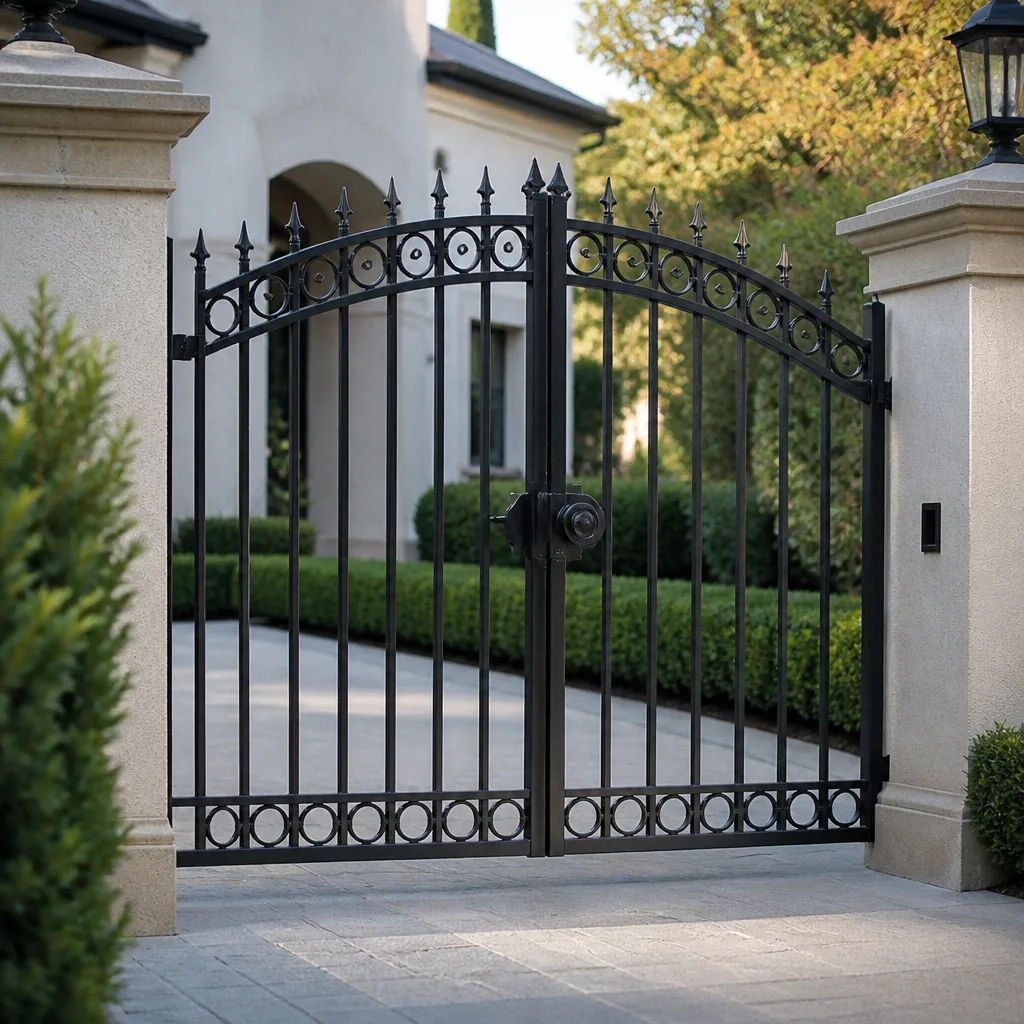 Wrought iron
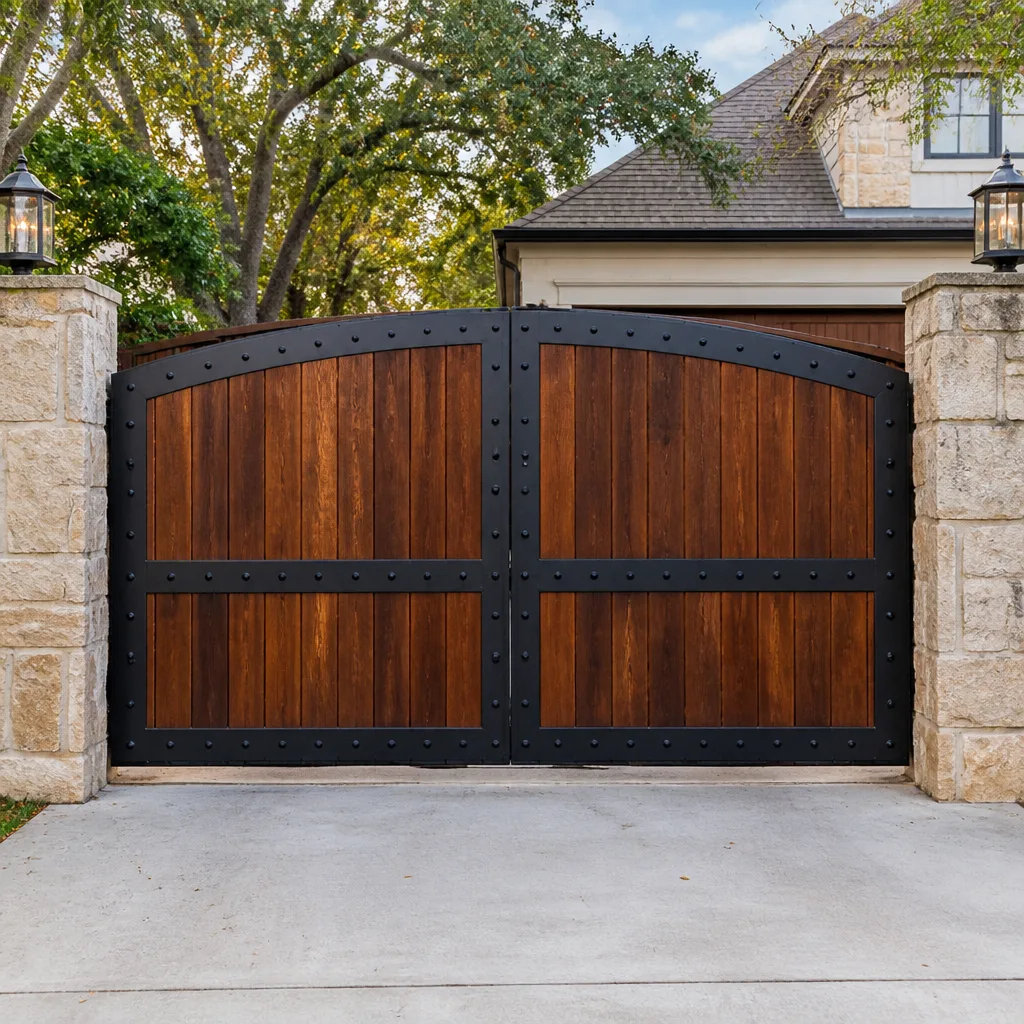 Wood & steel frame
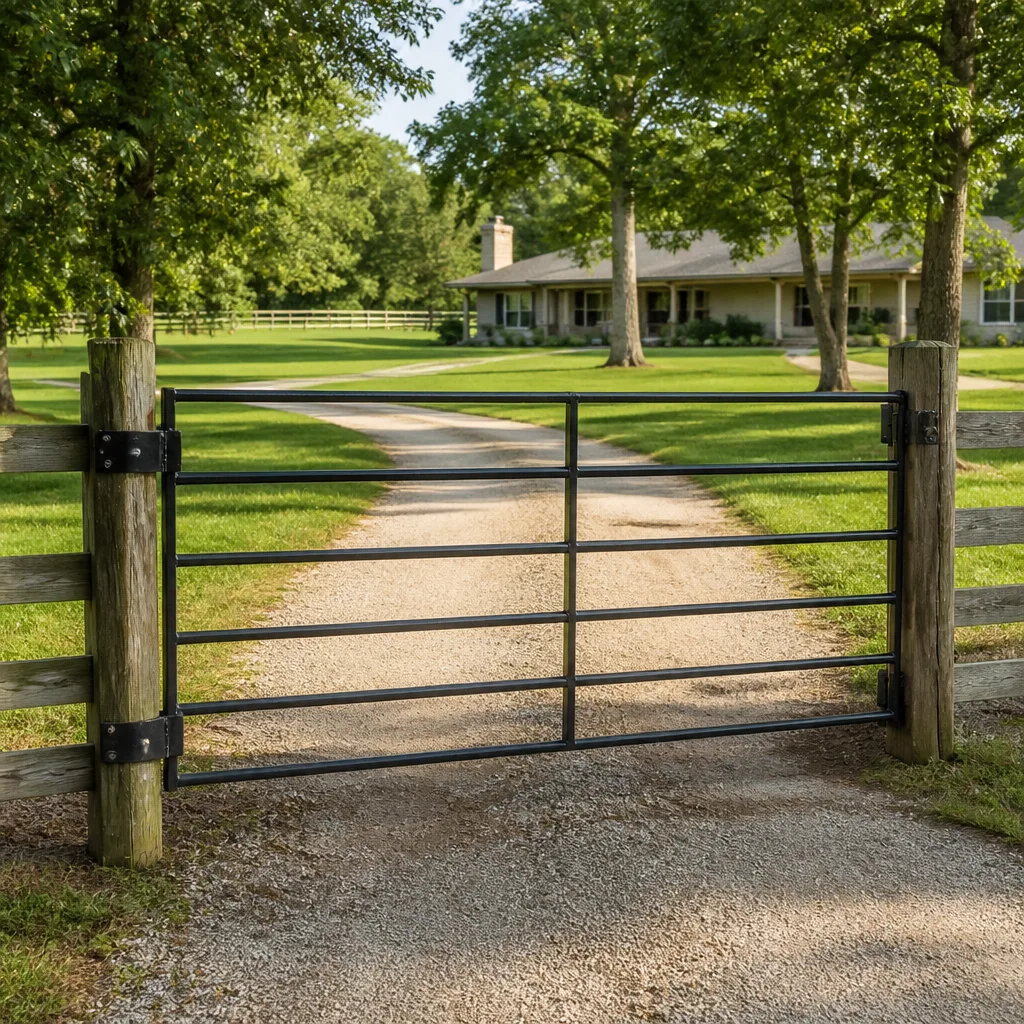 Farm & ranch
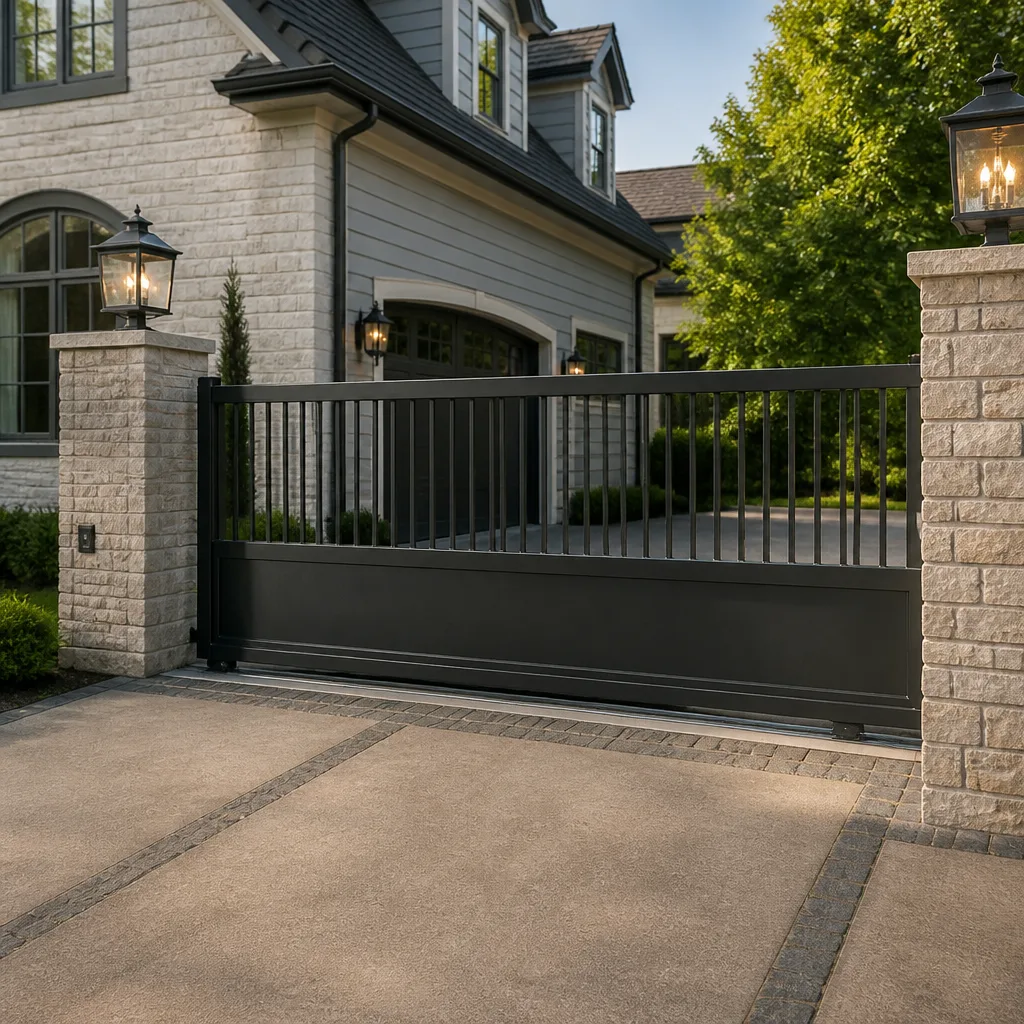 Sliding driveway gates
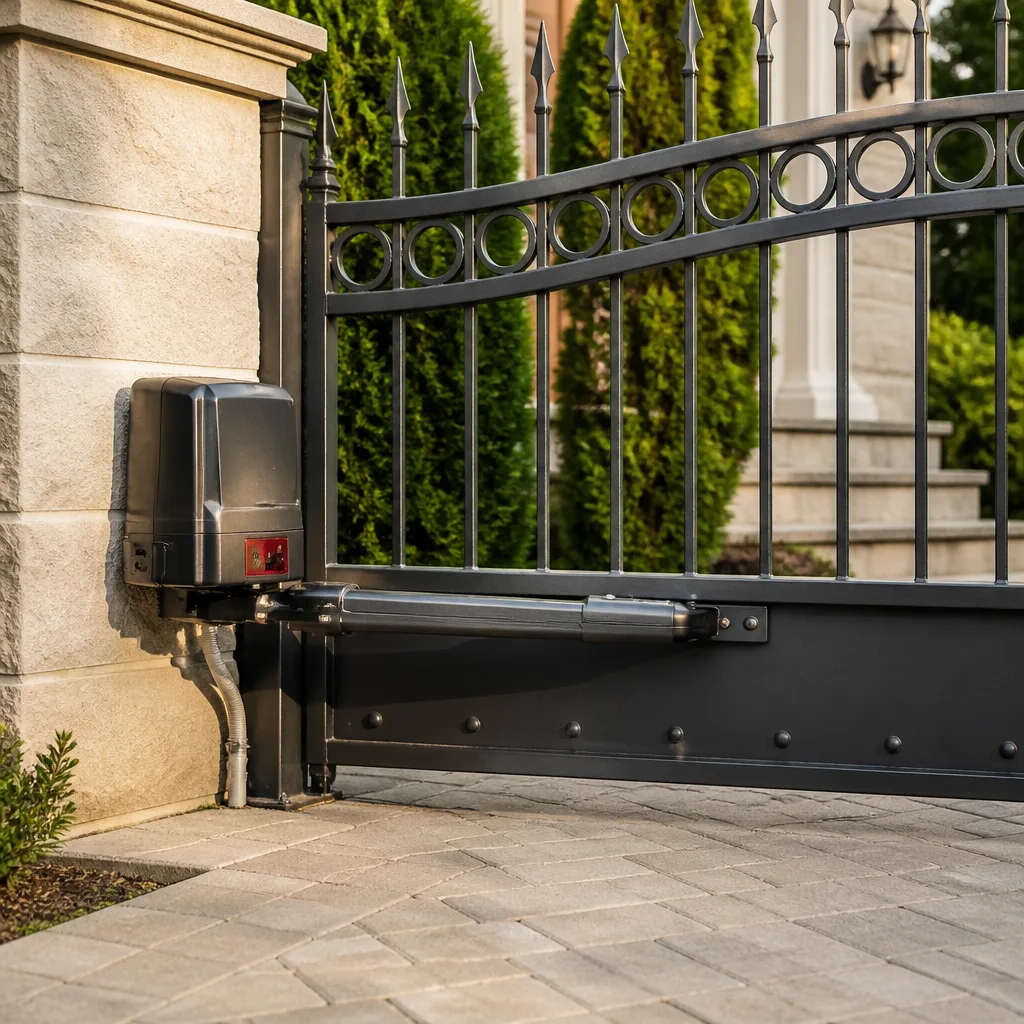 LiftMaster operators
Free on-site gate assessment - hinges, posts, and your LiftMaster or Nice gate operator checked before anything is quoted
The assessment is free and the quote is the invoice.
Get your free estimateGate Repair Cost Breakdown: The Everett Homeowner’s Reference for 2026
Two quotes for the same sticking gate, one at $200 and one at $800, don’t automatically mean one technician is gouging you. Often they reflect two different diagnoses. The lower quote may come from someone replacing the cheapest part and hoping it holds. The higher one may come from a technician who traced the fault to the operator’s control board and priced the real fix. Gate repair in Everett ranges widely because the work ranges widely, and most quotes never explain why. This reference breaks down what each repair actually costs, which parts drive the price, and how to read a quote before you sign it.
Quick Answer
Gate repair in Everett typically runs from about $85 for a sensor alignment to $4,500 or more for a commercial operator replacement. Most residential repairs land between $150 and $900, and the final price depends on the part, the labor involved, and whether access control has to be reprogrammed afterward. A written estimate should set the price before any work starts. Call (844) 834-1197 for a free estimate. We answer 24/7. Fast dispatch from 7am to 7pm, Sunday through Friday.
Styles & brands we work with
- Wrought iron
- Wood & steel frame
- Farm & ranch
- Sliding driveway gates
- LiftMaster operators
Table of Contents
- What Does Each Type of Gate Repair Cost?
- OEM vs. Aftermarket Parts: When the Price Difference Matters
- The Hidden Cost of Deferred Maintenance
- What a Diagnostic Fee Should Cover
- Cost Comparison by Gate Type: Sliding, Swing, and Barrier Arm
- How Everett’s Climate and Housing Shape Repair Costs
- How to Read a Gate Repair Quote
- Repair or Replace: How to Decide
What Does Each Type of Gate Repair Cost?
Hinge replacement on a residential swing gate typically costs $150 to $350 per hinge, including labor. Roller replacement on a sliding gate usually runs $120 to $300 per roller assembly. Those are the small jobs. The big numbers come from operators and control boards, and that’s where most of the confusion in a quote comes from. Here’s how the typical ranges break down for an Everett property.
| Repair Type | Typical Estimated Range | What Drives the Price |
|---|---|---|
| Hinge replacement (swing gate) | $150 – $350 per hinge | Gate weight, hinge style, whether the post needs reinforcement |
| Roller replacement (sliding gate) | $120 – $300 per roller | Track condition, roller size, gate panel weight |
| Sensor or safety edge alignment | $85 – $200 | Whether the sensor is misaligned or failed |
| Control board replacement (residential) | $250 – $600 | Board availability for your brand, reprogramming time |
| Residential operator replacement | $900 – $2,200 | Operator model, gate type, wiring condition |
| Commercial operator replacement | $2,000 – $4,500+ | Duty cycle rating, access control integration, site wiring |
| Access control reprogramming | $100 – $400 | Number of remotes, keypads, or entry devices to re-pair |
These are estimates, not quotes. The written estimate you receive after we look at the gate is the number that counts, and it’s agreed before any work begins. Labor in the Everett area tracks with the complexity of the job rather than a flat hourly rate, because a commercial slide gate with a DoorKing operator takes far more diagnostic time than a residential swing gate with a Mighty Mule arm. Whether the gate is welded steel, aluminum, or wood also changes how long a hinge or roller swap takes.
OEM vs. Aftermarket Parts: When the Price Difference Matters
OEM parts cost more than aftermarket equivalents, usually by 20% to 60%, and the difference matters most on operators and control boards. An aftermarket hinge or roller is often fine. An aftermarket control board for a Ghost Controls or Elite operator is a different story, because the board has to talk to the rest of the system, including the safety edges and the access control you already have programmed in.
Here’s how to think about the trade-off:
- Hinges and rollers: aftermarket is usually acceptable if the material matches the original. The part does one mechanical job.
- Control boards: OEM is worth the premium. Board firmware varies between production runs, and a mismatched board can cause repeat faults that look like a new problem.
- Operators: brand-specific parts availability is the deciding factor. A residential arm operator from a common brand is easy to source. A commercial operator that needs a specific actuator or limit switch can take days to source aftermarket, which stretches the job.
- Sensors and safety edges: match the brand. Safety devices are the parts that protect people, and mixed components are where nuisance trips come from.
We work on the brand you already own, so we’re familiar with how the parts behave in each system. When we quote a repair, we tell you which parts we’d use OEM on and which aftermarket is a fair replacement. That way the price difference is a decision you make, not a surprise on the invoice. From Ghost Controls to DoorKing, the part-matching rules are the same. For a closer look at how we handle the electrical side of these jobs, see our page on electric gate repair.
The Hidden Cost of Deferred Maintenance
A $150 adjustment call that gets put off can turn into a $900 motor replacement six months later. That’s not a scare tactic, it’s how gate systems wear. A gate that drags slightly on one roller puts extra load on the operator every single cycle. The operator compensates, heats up, and eventually the motor or the control board fails. By then you’re paying for the part the adjustment would have protected.
The pattern we see most often in Everett goes like this:
- A small symptom appears. The gate hesitates, reverses partway, or a remote stops responding reliably.
- The system works around it. The operator pushes harder. The control board logs a fault and resets.
- The fault becomes a failure. The motor burns out, a capacitor fails, or a limit switch goes out of range for good.
- The repair scope grows. What started as a roller or sensor adjustment now includes an operator or control board.
The math is simple. A one-time adjustment visit priced per job is a fraction of what an operator replacement costs. It also keeps the gate operating quietly, which is the difference between a system that lasts and one that eats parts. If your gate is already showing symptoms, that’s the moment to have it looked at. Call (844) 834-1197 for a free estimate. We answer 24/7. Fast dispatch from 7am to 7pm, Sunday through Friday.
What a Diagnostic Fee Should Cover
A diagnostic fee should cover an actual diagnosis: a technician testing the operator, the sensors, the wiring, and the access control, then explaining what failed and what the repair will cost. It should not be a low entry price that exists only to get someone out the door and into an upsell. In the Everett market, the honest version of this is simple. Our estimates are free, and the price is set per job by a written estimate agreed before work starts.
Ask these questions before you book any gate repair:
- What will the diagnostic actually test? A real diagnosis covers the mechanical side (hinges, rollers, track) and the electrical side (operator, board, sensors, wiring).
- Will I get the findings in writing? You should know what failed and why before you approve anything.
- Is the price fixed once approved? The written estimate is the number. Any change should come back to you for approval first.
- Does the quote explain the parts? A part number and whether it’s OEM gives you something to check.
- Is the diagnose-then-replace path clear? You want a technician who tests before swapping parts, not one who replaces the cheapest part and hopes.
When a quote comes in much lower than others for the same symptom, ask which part is being replaced and why that part was chosen. That single question separates a real diagnosis from a guess. If the answer is vague, the price probably isn’t the whole story.
Cost Comparison by Gate Type: Sliding, Swing, and Barrier Arm
Sliding gates, swing gates, and barrier arms fail in different ways, so they cost different amounts to keep running. The system with the highest repair frequency in the Everett area tends to be the sliding gate, because it has more moving parts: rollers, a track, a rack, and an operator that has to be aligned to all of them. Swing gates are simpler mechanically but put more stress on hinges and posts. Barrier arms are mostly found on commercial and HOA entrances, and their costs cluster around the operator and the access control.
- Sliding gates: roller and track wear is constant, and alignment problems show up as the gate binding or stalling. Operators on slide gates work harder, so control board and motor failures are more common. Typical repair range: $120 to $2,200 depending on whether the operator is involved.
- Swing gates: hinge wear, post settlement, and arm operator faults dominate. A sagging gate puts load on the operator. Typical repair range: $150 to $2,000.
- Barrier arms: operator duty cycle, arm balance, and access control integration drive cost. These are almost always commercial or HOA systems. Typical repair range: $400 to $4,500+.
The gate type also changes what a technician can diagnose on the first visit. A slide gate with a rack-and-pinion drive can usually be tested in place. A commercial swing operator tied into access control may need the controller read out before the cause is clear. Knowing which of these you have helps you understand why two quotes for a “gate repair” can differ so much. For the repair side in more detail, see our gate repair page.
How Everett’s Climate and Housing Shape Repair Costs
Everett’s wet winters and cool, damp stretches put specific stress on gate systems. Rain and constant moisture work into hinge pins, roller bearings, and the lower track of a sliding gate. When water sits in those spots, moving parts stiffen, and a gate that ran smoothly in July starts to drag by January. That drag is the same thing that loads up the operator. It’s also why keeping hinges and rollers free of standing water and debris is worth more here than in a drier climate.
Housing and lot layout matter too. Everett has a mix of older residential lots with narrow driveways and newer developments with wider entrances. A narrow driveway means a swing gate with less clearance for the arc, which puts more demand on the hinge and the arm operator. A wider entrance often means a sliding gate, which brings the roller and track wear described above. Around neighborhoods like Silver Lake, Riverside, and the Bayside area, we see a lot of driveways that were set up for one gate style and later had a different operator added. Those mixed setups are where alignment and programming problems tend to hide, and they take longer to diagnose.
Damp weather also affects the electrical side. Moisture in a junction box, a corroded terminal, or a safety edge that trips in the rain are all common calls. Those are electrical faults, not mechanical ones, and they need a technician who tests the circuit rather than replacing the operator. That’s a core part of what we do, and it’s why we treat diagnosis as its own step.
How to Read a Gate Repair Quote
A gate repair quote should tell you three things: what failed, what part fixes it, and what the total will be. If any of those are missing, ask before you approve. Here’s a step-by-step way to read a quote for a gate in Everett.
- Check the diagnosis line. It should name the failed component, not just “gate not working.” A control board, a limit switch, a roller, and a sensor each lead to a different repair.
- Check whether the part is OEM or aftermarket. This matters most on boards and operators, less on hinges and rollers.
- Check whether the price includes labor and reprogramming. If the operator or board is replaced, access control usually needs to be re-paired. That should be in the quote, not added later.
- Check whether the estimate is written and fixed. The written estimate sets the price. Anything beyond it should come back to you first.
- Check the warranty terms. Ask what’s covered and for how long before the work starts.
A quote that reads clearly is a sign the technician understands the system. A quote that just lists a price and a part is a sign you’re about to find out the rest on the invoice. If you’re comparing quotes and one is far below the rest, the question to ask is which part is being replaced and why. Call (844) 834-1197 for a free estimate. We answer 24/7. Fast dispatch from 7am to 7pm, Sunday through Friday.
Repair or Replace: How to Decide
Repair makes sense when the gate structure is sound and the failure is in a single component. Replace when the operator is at the end of its service life, the parts are no longer available, or the repairs keep landing on the same system. A good rule of thumb: if the repair cost approaches half the cost of a new operator and the existing unit is already showing multiple faults, replacement is usually the better spend.
For a residential swing gate on a Mighty Mule or Elite arm operator, most faults are repairable for a fraction of a new install. For a commercial DoorKing or FAAC operator tied into access control, the calculus shifts, because replacing the operator also means re-integrating entry devices and safety edges. That integration work is part of the cost either way, so it’s worth weighing whether a repair buys you a few more years or just delays the inevitable.
We’ll tell you which one actually makes sense. If a repair will hold, we’ll say so. If the honest answer is replacement, we’ll explain why and quote the install. The goal is a gate that’s secure and working, not the biggest invoice. For the full picture of what a new system involves, that work is measured and scheduled rather than same-day, and it’s quoted in writing first.
Common Mistakes to Avoid
- Approving a repair without a written estimate. Verbal prices drift. Get the diagnosis and the total in writing before work starts, or you lose the ability to compare.
- Choosing the cheapest quote without asking which part is being replaced. A low quote for the wrong part means you pay twice. Ask what failed and why that part was chosen.
- Ignoring a small symptom through the wet season. A gate that drags in January loads the operator every cycle. In Everett’s climate, a stiff roller tends to become a motor problem if it’s left alone.
- Replacing an operator when the fault is electrical. A corroded terminal or a wet safety edge can look like a dead operator. Testing the circuit first saves the cost of an unnecessary replacement.
- Mixing brands on safety devices. An aftermarket safety edge paired with a different brand’s control board causes nuisance trips. Match the brand on anything that protects people.
- Skipping the reprogramming in the quote. If the operator or board is replaced, remotes, keypads, and entry devices usually need re-pairing. It should be priced in, not added at the end.
- Assuming a gate can be repaired like a garage door. Gate systems have their own operators, safety edges, and access control. A general handyman or garage-door company that dabbles in gates may not carry the right parts or know the failure patterns.
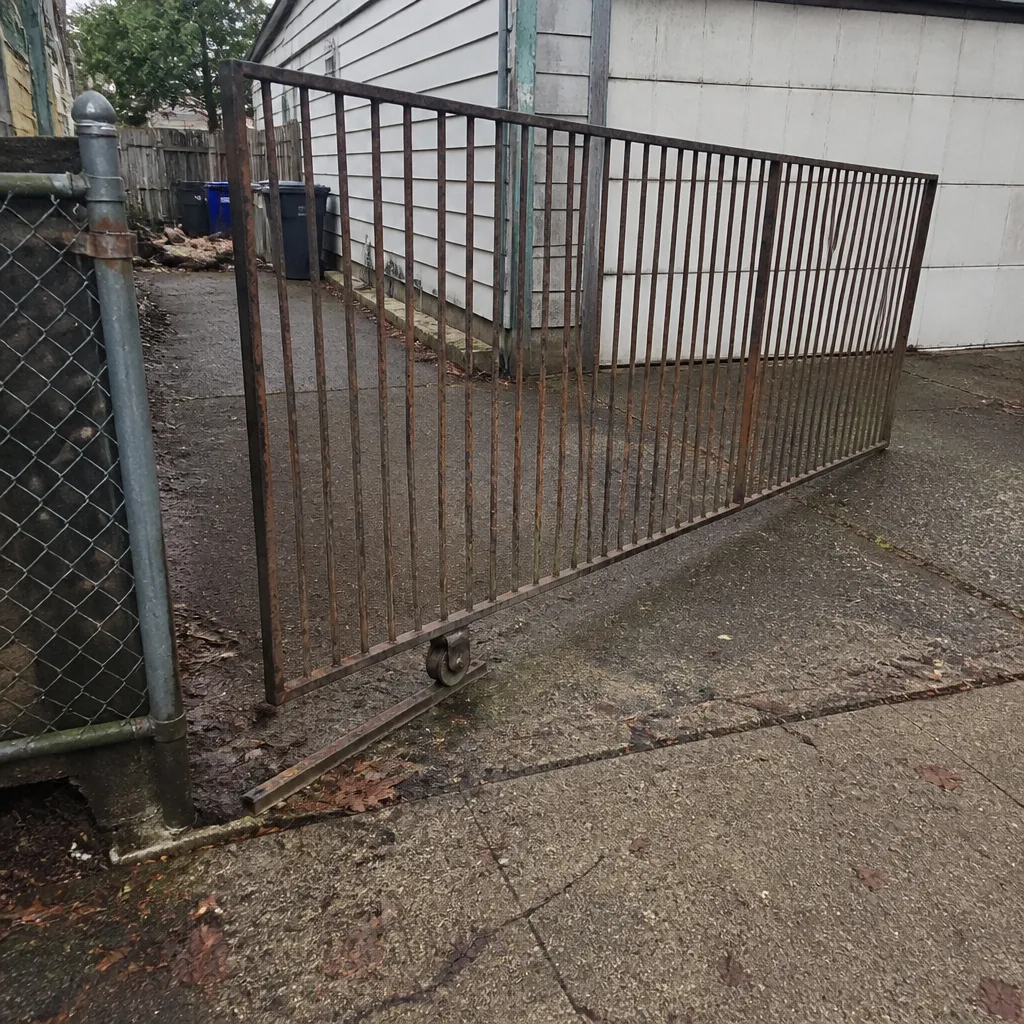
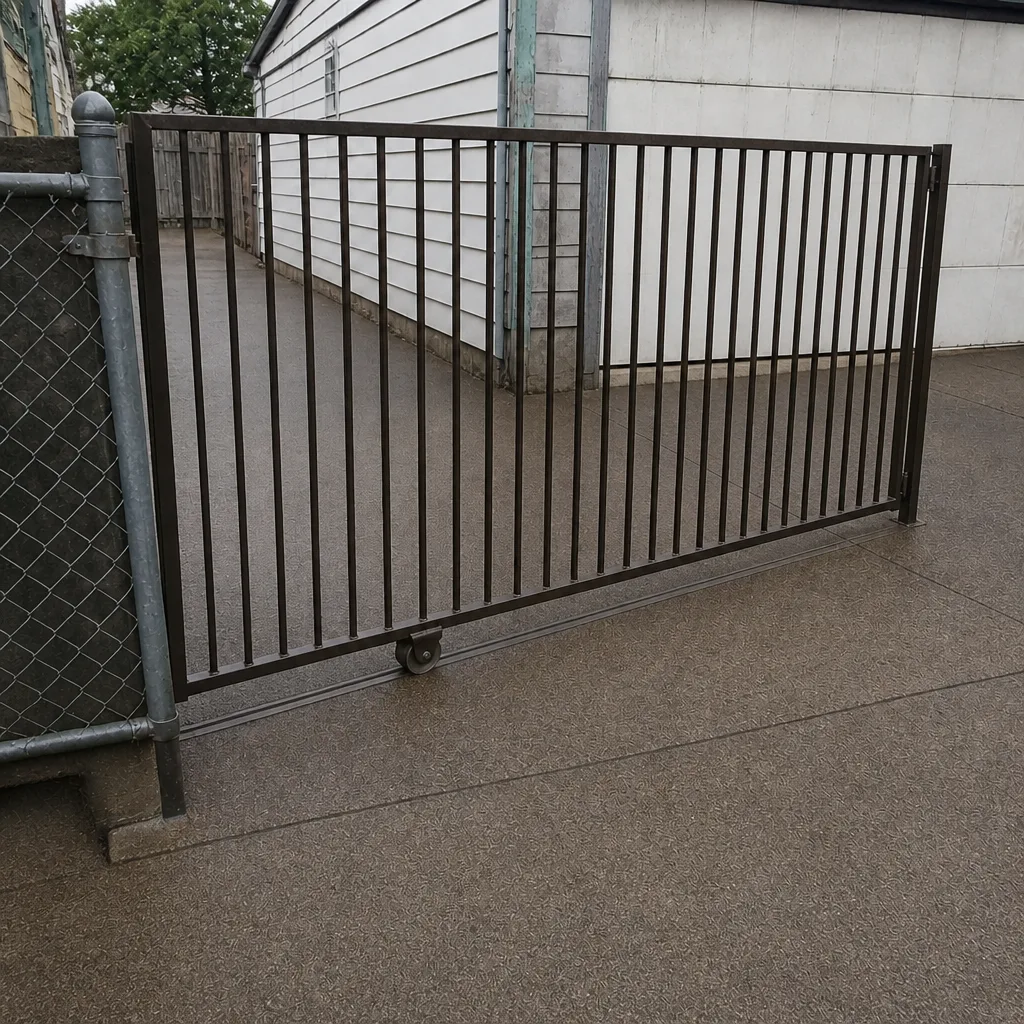
See the difference
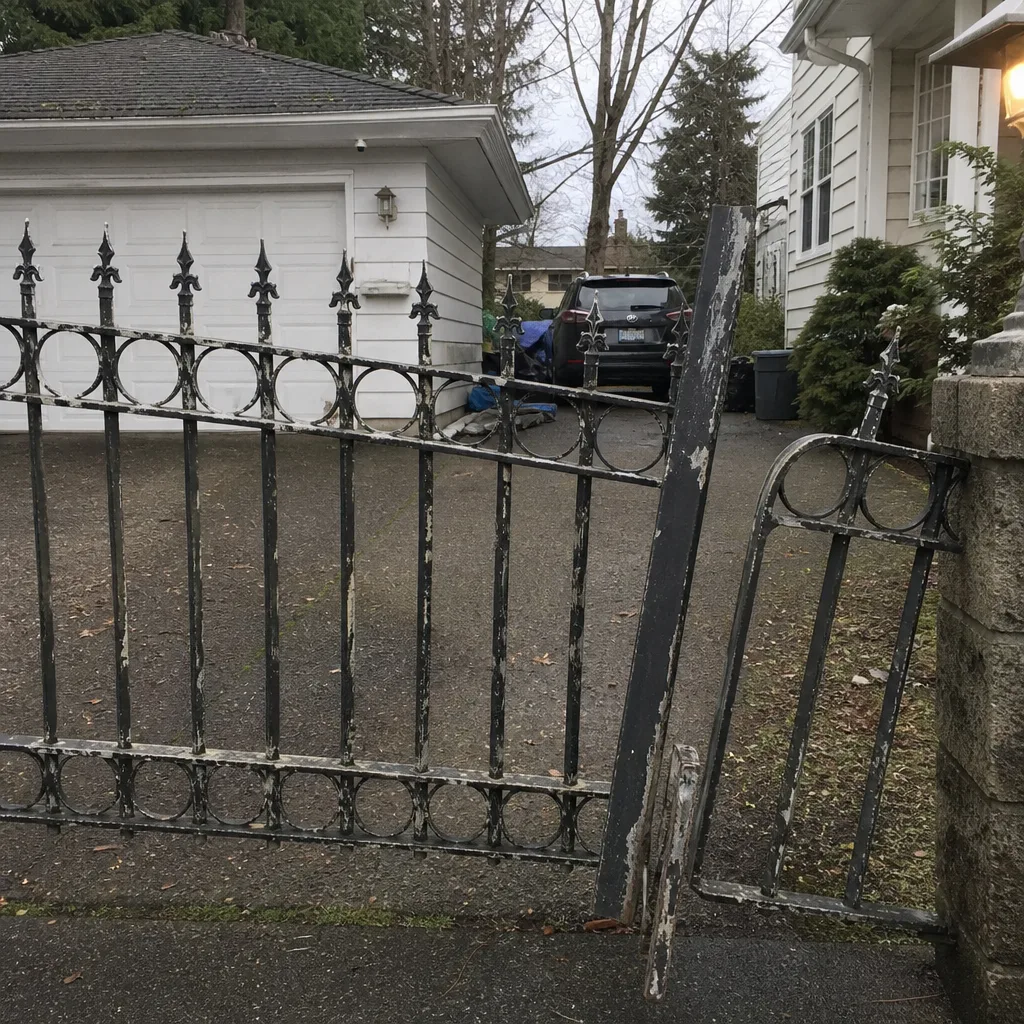 Before
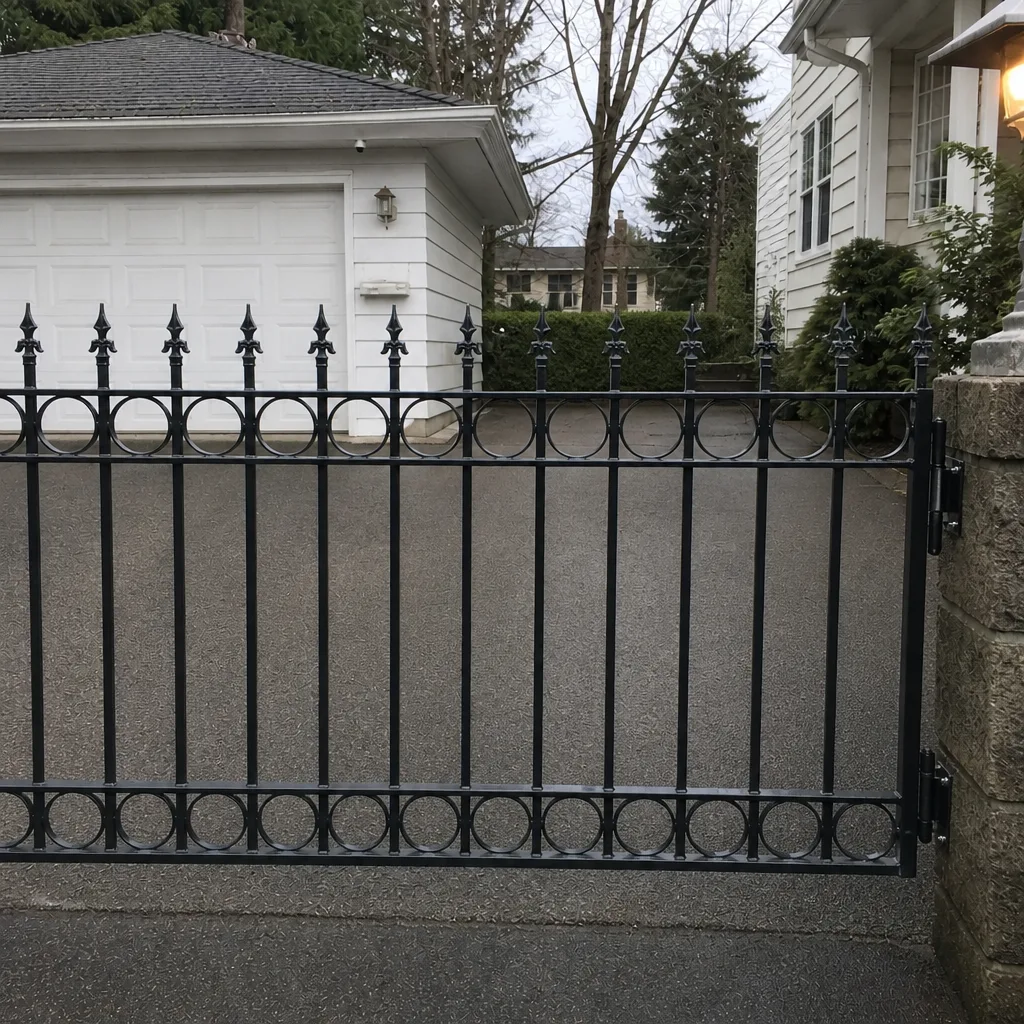 After
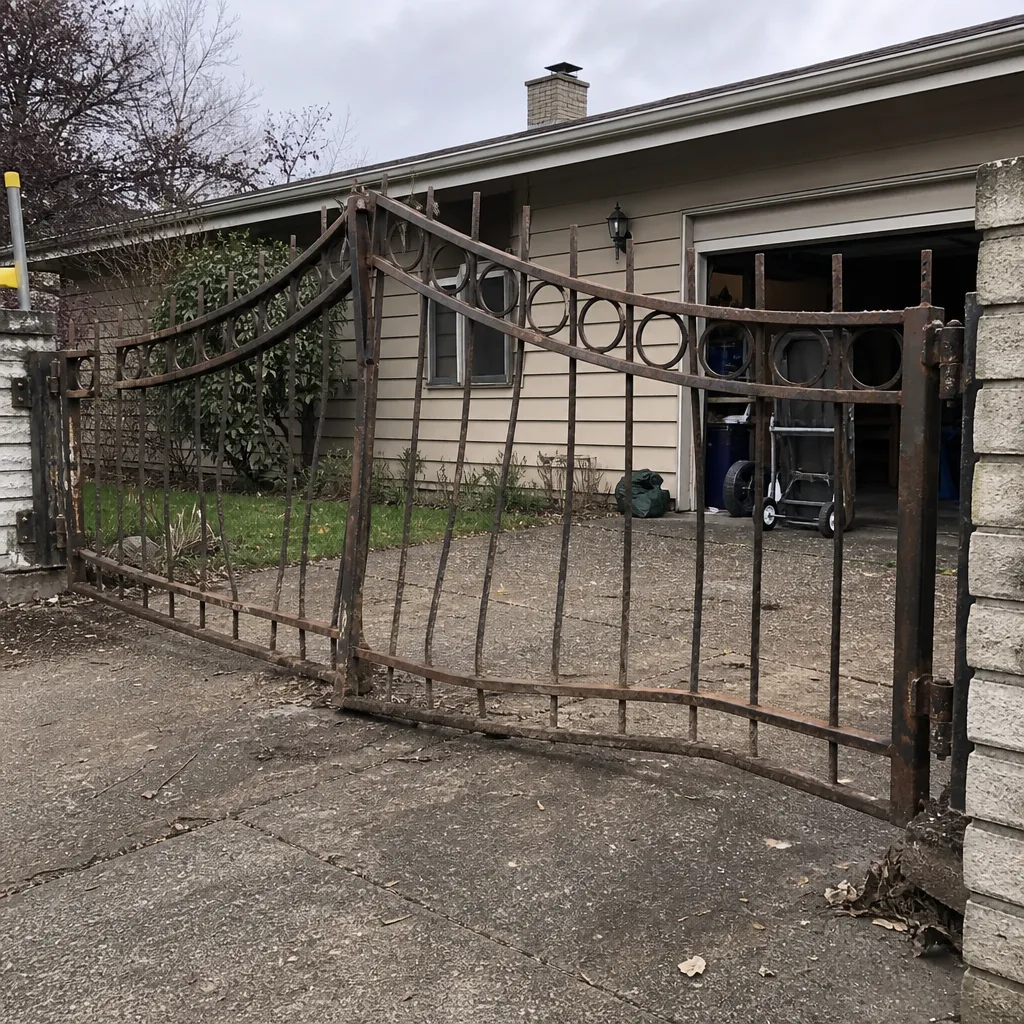 Before
 After
 Before
 After
When to Call a Professional
Call a professional when the gate stops reversing, when a safety edge stops responding, when a remote or keypad no longer works reliably, or when the operator runs but the gate doesn’t move. Those are all signs the fault could be electrical, and electrical gate work involves line voltage, live wiring, and heavy moving panels. A gate that has come off its track on a slide gate, or a swing gate whose post has settled so the panel no longer closes square, are also jobs for a trained technician. Don’t try to adjust an operator or chase wiring yourself. The components carry real voltage, and a gate panel can crush or pinch. Gate Repair Everett offers free estimates in Everett. Call (844) 834-1197. We answer 24/7. Fast dispatch from 7am to 7pm, Sunday through Friday.
Frequently Asked Questions
Gate repair in Everett typically ranges from about $85 for a sensor alignment to $4,500 or more for a commercial operator replacement, with most residential repairs between $150 and $900. The written estimate sets the final price, and it’s agreed before any work starts. Call (844) 834-1197 for an exact quote. Estimates are free.
For repair and emergency calls, same-day service is often possible. We answer 24/7, with fast dispatch from 7am to 7pm, Sunday through Friday, and we’re closed Saturday. A call outside dispatch hours is booked into the next opening. Call (844) 834-1197 and we’ll tell you what’s available.
The gap usually comes down to diagnosis. One technician may have identified the actual failed part, while another is replacing the cheapest part and hoping it holds. Ask each one which part is being replaced and why, and whether it’s OEM or aftermarket. That answer explains most of the price difference. Call (844) 834-1197 for a free estimate that puts the diagnosis in writing.
OEM is worth the premium on control boards, operators, and safety devices, because those parts have to match the rest of the system. On hinges and rollers, a quality aftermarket part is often fine. It depends on the component, not on a blanket rule. Call (844) 834-1197 and we’ll tell you which parts we’d use OEM on for your gate.
In most cases, yes. We work on the brand you already own, including Ghost Controls, DoorKing, Elite, Mighty Mule, LiftMaster, FAAC, BFT, Linear, and Viking. Our technicians have up to experience, and brand familiarity shortens diagnosis because we recognize model-level failure patterns. Call (844) 834-1197 for a free estimate.
Repair if the gate structure is sound and one component has failed. Replace if the operator is at the end of its service life, parts are unavailable, or the same system keeps failing. If the repair cost approaches half the cost of a new operator and there are multiple faults, replacement is usually the better spend. Call (844) 834-1197 and we’ll tell you which one makes sense for your gate.
The Bottom Line
Gate repair pricing in Everett spans a wide range, and the gap between a $200 quote and an $800 quote is usually about diagnosis, parts, and whether access control has to be reprogrammed. Small repairs like hinges, rollers, and sensor alignment stay in the low hundreds. Operators and control boards push the price higher, and commercial systems go higher still. The fixed costs that matter most are the ones a homeowner controls: getting a written estimate, asking which part is being replaced and why, and not letting a $150 adjustment become a $900 motor replacement. Focused gate specialists handle the diagnosis, repair, and install under one roof, on the brand you already own. If you have a gate acting up in Everett, call (844) 834-1197 for a free estimate. We answer 24/7. Fast dispatch from 7am to 7pm, Sunday through Friday.
For a full view of what we do, start at Gate Repair Everett. If you’re nearby and want local context, our Everett page covers the area we work in.
Written by the team at Gate Repair Everett.